
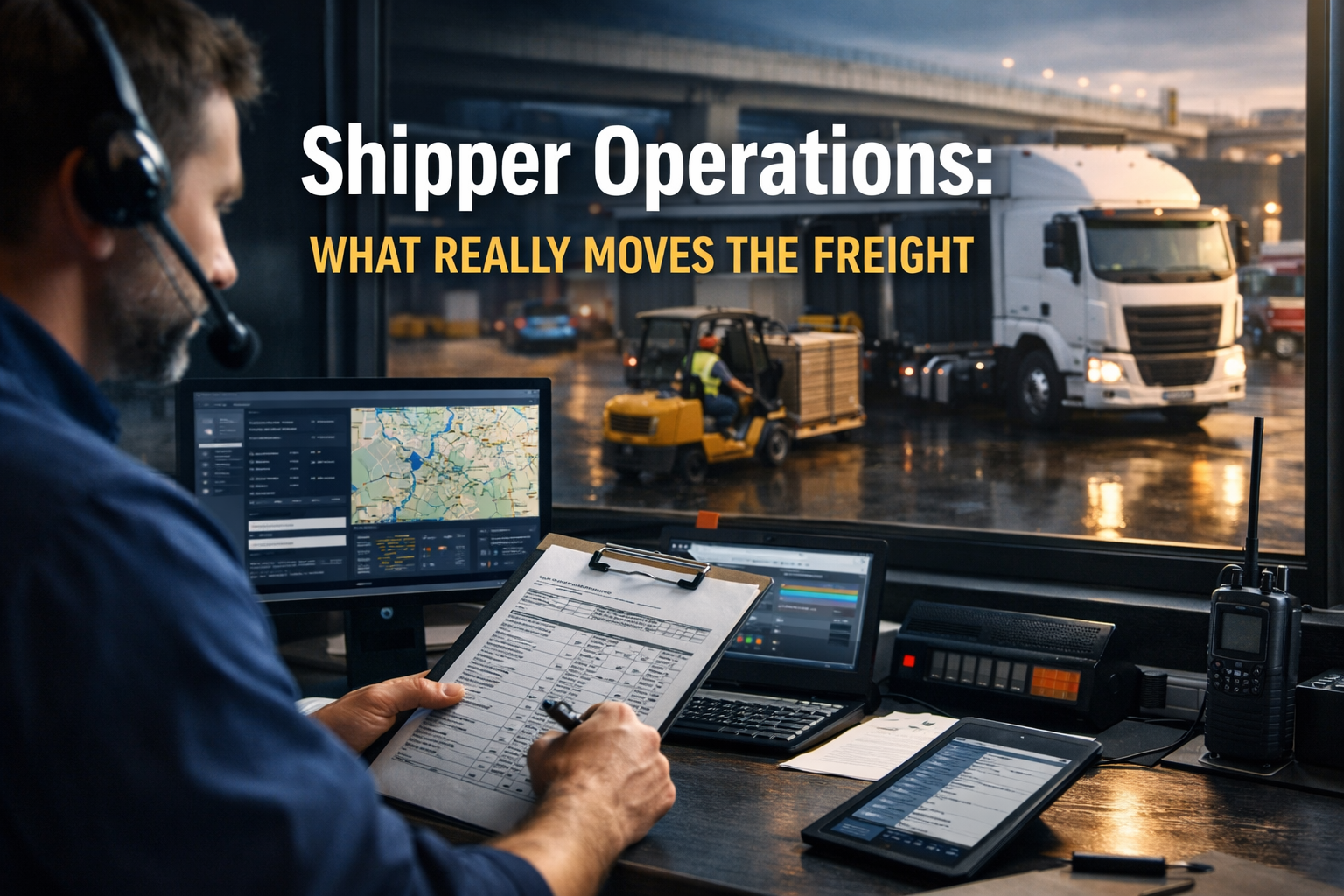
Ever wonder how products get from factories to store shelves? Behind every delivery is a complex dance of shipper operations, the often-invisible process that keeps the supply chain moving. Whether you're a logistics professional, business owner, or just curious about how freight actually works, understanding shipper operations reveals what really makes freight move efficiently (or not).
What Is a Shipper in Freight Operations?
A shipper is the company or individual who has freight that needs to move from one location to another. They're the starting point of every shipment—the ones with products sitting in warehouses or factories that need to reach customers.
Shippers can be manufacturers sending products to retailers, retailers moving inventory between stores, distributors supplying businesses, e-commerce companies fulfilling orders, or wholesalers delivering to customers. Essentially, if you have goods that need transportation, you're a shipper.
The Core Components of Shipper Operations
Effective shipper operations involve much more than just calling a trucking company when you need something moved.
Freight Planning and Forecasting - Smart shippers don't wait until the last minute. They analyze historical shipping patterns, forecast upcoming volume needs, plan for seasonal demand spikes, and coordinate with production schedules. This forward planning prevents capacity crunches and reduces emergency freight costs that can destroy profit margins.
Carrier Selection and Management - Choosing the right transportation provider makes or breaks shipper operations. This means evaluating carriers based on reliability, cost, coverage area, and equipment availability. Building relationships with multiple carriers for backup capacity. Negotiating rates and contract terms. Monitoring carrier performance with scorecards. The best shippers treat carriers as strategic partners, not just vendors.
Load Preparation and Documentation - Before freight moves, shippers must get everything ready. Proper packaging to prevent damage during transit. Accurate weight and dimension measurements. Complete bills of lading with pickup and delivery details. Special handling instructions clearly communicated. Customs documentation for international shipments. Poor preparation causes delays, damage, and added costs.
Warehouse and Dock Operations - The loading dock is where shipper operations become reality. Efficient dock operations schedule appointments to prevent congestion, stage freight for quick loading, use proper loading equipment, verify load accuracy before trucks depart, and maintain safety standards. Dock delays frustrate carriers and create cascading schedule problems.
Communication and Coordination - Great shipper operations require constant communication. Coordinating pickup times with carriers, providing tracking updates to customers, handling schedule changes proactively, resolving issues quickly when they arise, and maintaining relationships across the supply chain. Communication breakdowns cause most shipping problems.
Cost Management and Optimization - Shipping costs directly impact profitability. Smart shippers consolidate shipments to reduce costs, optimize packaging to maximize truck capacity, negotiate volume discounts with carriers, analyze freight spend to find savings opportunities, and balance cost against service requirements. Every dollar saved on shipping flows to the bottom line.
Common Challenges in Shipper Operations
Capacity Constraints - When demand exceeds available trucks, shippers struggle to move freight. This gets worse during peak seasons, in tight freight markets, or for difficult lanes. Smart shippers build carrier relationships before they desperately need capacity.
Rising Transportation Costs - Fuel prices, driver wages, insurance, and regulations keep pushing freight rates higher. Shippers must find efficiencies to offset these increases without sacrificing service quality.
Last-Minute Changes - Production delays, order changes, or customer emergencies force shippers to modify plans constantly. Flexibility is essential, but too many last-minute changes damage carrier relationships and increase costs.
Damaged or Lost Freight - Poor packaging, rough handling, or carrier errors result in damaged goods. This means filing claims, replacing products, and dealing with unhappy customers. Prevention through proper packaging and carrier selection beats dealing with damage claims.
Visibility Gaps - Many shippers lack real-time visibility into where their freight is and when it will arrive. This makes it impossible to give customers accurate updates or proactively solve problems.
Best Practices for Shipper Operations
Plan Ahead Whenever Possible - Last-minute freight costs significantly more and gets lower priority from carriers. Planning shipments in advance gives you more options, better rates, and higher reliability.
Communicate Clearly and Early - Tell carriers everything they need to know about pickups, deliveries, and special requirements. Surprises at the dock waste everyone's time and money.
Standardize Processes - Create standard operating procedures for freight preparation, documentation, and communication. Consistency reduces errors and speeds operations.
Measure and Improve - Track on-time shipment rates, freight costs as a percentage of revenue, damage and claims rates, carrier performance scores, and customer satisfaction with deliveries. Use this data to drive continuous improvement.
Invest in Technology - TMS software, warehouse management systems, and tracking tools pay for themselves through improved efficiency and cost savings. Don't try to run modern shipper operations with spreadsheets.
Build Strategic Partnerships - Move beyond transactional relationships with carriers. Strategic partnerships with key carriers create mutual benefits—consistent volume for them, priority capacity for you.
Different Types of Shipper Operations
High-Volume Shippers run dedicated operations with contract carriers, negotiate volume-based rates, use sophisticated TMS platforms, and employ logistics teams managing transportation. They have leverage with carriers but face high fixed costs.
Small to Medium Shippers typically use third-party logistics providers (3PLs), mix contract and spot market freight, use simpler technology solutions, and wear multiple hats within their organizations. Flexibility is their advantage, but they have less negotiating power.
Specialized Shippers handle refrigerated goods, hazardous materials, oversized cargo, or time-critical freight. They need specialized knowledge, equipment, and carrier relationships. These operations command premium rates but face limited carrier options.
The Real Costs Beyond Freight Rates
Smart shippers look beyond the per-mile rate to understand total cost.
Accessorial Charges - Detention time, redelivery attempts, lift gate service, and special equipment add up quickly. Many shippers discover accessorials cost more than they realized.
Damage and Claims - Poor packaging or carrier selection leads to damaged freight. The cost includes product replacement, customer goodwill, and administrative time processing claims.
Inventory Carrying Costs - Slow or unreliable transportation forces shippers to carry extra inventory as buffer. This ties up capital and increases warehousing costs.
Lost Sales - Late deliveries or stockouts from transportation problems cost actual revenue. This invisible cost often exceeds the freight charges.
Administrative Burden - Manual processes, claim resolution, and problem-solving consume employee time that could create value elsewhere.
How Great Shipper Operations Drive Business Success
Effective shipper operations aren't just about moving boxes—they directly impact business performance.
Customer Satisfaction - Reliable deliveries keep customers happy and coming back. Your transportation service is often the last impression customers have of your business.
Cost Control - Transportation typically represents 5-15% of product cost. Efficient shipper operations protect profit margins through better rates, fewer errors, and optimized processes.
Competitive Advantage - Companies that ship faster, more reliably, or more cost-effectively win market share. Superior shipper operations become a competitive weapon.
Business Scalability - As you grow, transportation complexity increases exponentially. Strong shipper operations scale with your business instead of becoming a bottleneck.
Shipper operations are the engine that moves freight from Point A to Point B. Behind every successful delivery are planning, relationships, processes, and technology working together. What really moves freight isn't just trucks and drivers, it's effective shipper operations that plan ahead, communicate clearly, treat carriers as partners, leverage technology, and continuously improve.
Whether you're shipping truckloads daily or occasional LTL shipments, these principles apply. The shippers who master these operations move freight more reliably, at lower cost, with fewer problems than their competitors. And in a world where customers expect Amazon-level service regardless of your industry, that operational excellence isn't optional, it's essential for survival and growth. Master shipper operations, and you've mastered a critical component of business success.

Leave a comment
Your email address will not be published. Required fields are marked *