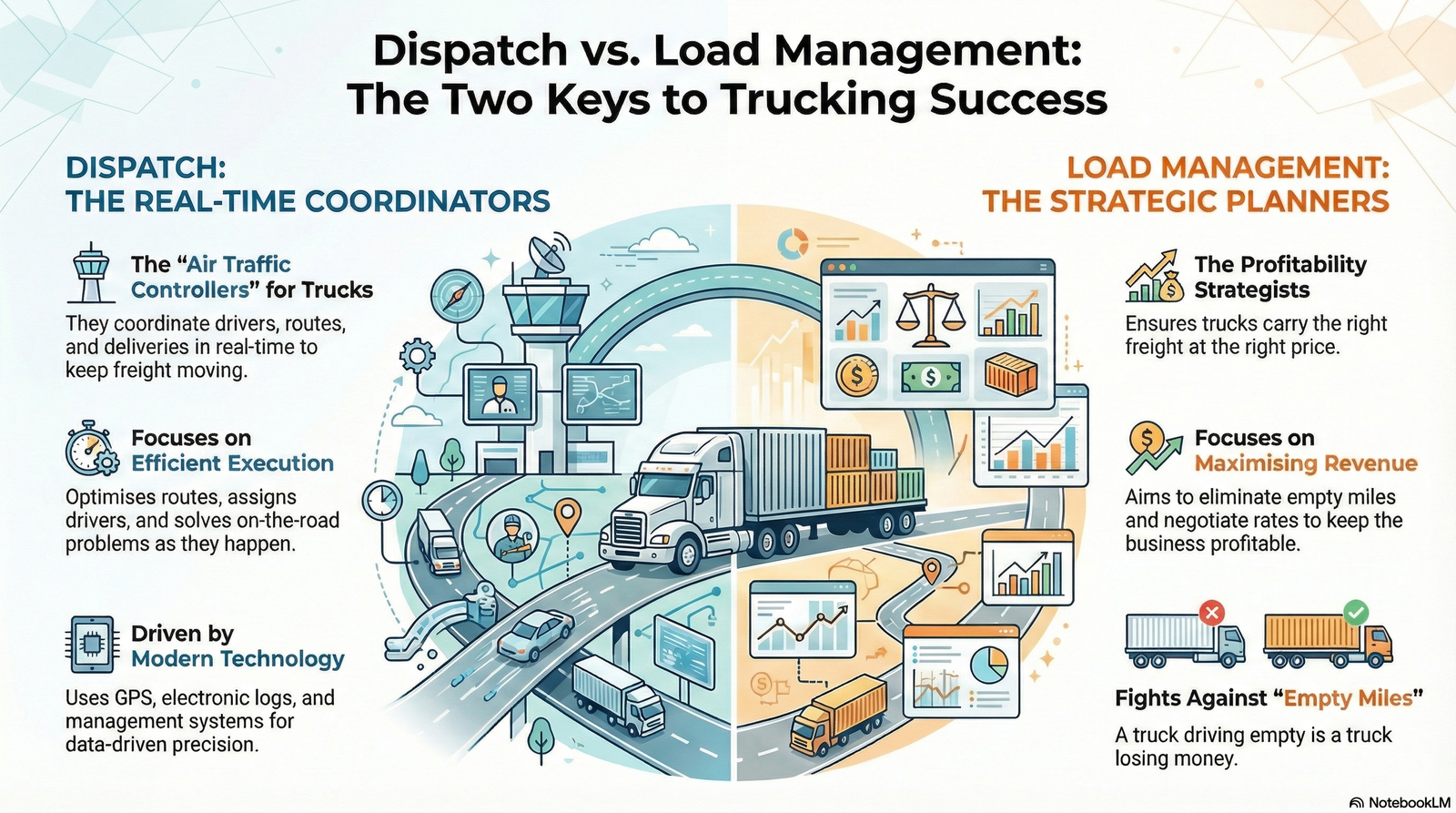

In freight operations, dispatch mistakes don't just cause headaches, they cost serious money. A single error can turn a profitable load into a financial disaster, damage customer relationships, and send drivers looking for better companies to work with.
The good news? Most dispatch mistakes are completely preventable once you know what to watch for. Let's break down the most common errors that create load issues and how you can avoid them.
1. Poor Communication With Drivers
This is the number one culprit behind load problems. When dispatchers don't communicate clearly or frequently enough, things fall apart fast.
The Mistake: Sending incomplete load details, failing to confirm driver understanding, ignoring driver questions or concerns, and assuming drivers know information you haven't shared.
The Consequences: Drivers show up at wrong addresses, miss appointment windows, aren't prepared for special requirements like lift gates or tarps, and waste time and fuel fixing preventable problems.
The Fix: Provide complete load information upfront including exact addresses, contact names and numbers, appointment times, and special equipment needs. Confirm drivers understand the details before they leave. Keep communication lines open throughout the trip. Respond promptly to driver questions and concerns.
2. Ignoring Hours of Service Regulations
Pushing drivers to violate HOS rules might seem like a quick fix for tight deadlines, but it creates massive problems.
The Mistake: Planning routes that exceed legal driving hours, pressuring drivers to skip required breaks, not accounting for drivers' available hours before assignment, and treating ELD violations as minor issues.
The Consequences: Hefty DOT fines for the company and driver, forced shutdowns when drivers run out of hours mid-route, accidents from fatigued driving, driver turnover when they feel pushed beyond safety limits, and potential loss of operating authority for repeat violations.
The Fix: Check available hours before assigning loads. Build routes with realistic timeframes that include required breaks. Use ELD data to plan ahead for drivers nearing hour limits. When delays happen, adjust expectations rather than pushing illegal driving. Remember that safety and compliance always come before on-time delivery.
3. Inadequate Load Planning and Research
Jumping into load assignments without proper research sets everyone up for failure.
The Mistake: Not verifying delivery locations are accessible for trucks, ignoring weight restrictions or permit requirements, overlooking special equipment needs, and failing to check for delivery hour limitations.
The Consequences: Drivers arrive unable to access delivery locations, loads get rejected for missing permits, equipment doesn't match load requirements forcing expensive last-minute changes, and missed deliveries damage customer relationships.
The Fix: Research delivery locations thoroughly using Google Maps street view and calling ahead to confirm access. Verify weight and dimension requirements against truck capabilities. Confirm all necessary permits are obtained before dispatch. Check delivery hour restrictions and appointment requirements. Ask clarifying questions when load details seem incomplete.
4. Overloading Drivers Schedules
Trying to squeeze too many loads into unrealistic timeframes creates chaos.
The Mistake: Back-to-back loads with no buffer time, not accounting for loading and unloading delays, scheduling multi-stop deliveries without realistic time calculations, and ignoring traffic patterns and congestion.
The Consequences: Cascading delays affecting multiple customers, stressed and frustrated drivers, missed appointments damaging your reputation, and drivers cutting corners on safety inspections to make up time.
The Fix: Build realistic schedules with buffer time for unexpected delays. Account for actual loading/unloading times based on customer history. Consider traffic patterns when planning delivery windows. Leave flexibility for multi-stop routes where delays at one stop affect all subsequent stops. Quality planning beats cramming in extra loads.
5. Poor Route Planning
Bad routing wastes fuel, time, and money while creating driver frustration.
The Mistake: Not using GPS or routing software, ignoring truck-specific restrictions, taking the shortest distance instead of the fastest time, and failing to check for construction or road closures.
The Consequences: Drivers hitting low bridges or weight-restricted roads, hours wasted on detours and backtracking, unnecessary fuel expenses, and late deliveries from avoidable delays.
The Fix: Use professional truck routing software that accounts for vehicle size and weight. Check current road conditions and construction before finalizing routes. Consider time of day for traffic congestion. Verify routes with experienced drivers familiar with the area. Update routes in real-time when conditions change.
6. Neglecting Load Documentation
Incomplete or incorrect paperwork causes expensive delays and payment issues.
The Mistake: Missing or incomplete bills of lading, incorrect weight or dimension information, failing to verify special requirement documentation, and not ensuring drivers have all necessary paperwork before departure.
The Consequences: Loads rejected at delivery, payment delays from documentation errors, fines for missing permits or customs paperwork, and detention time while paperwork gets corrected.
The Fix: Create documentation checklists for different load types. Double-check all paperwork before dispatch. Ensure drivers understand what documentation they need and where to submit it. Use digital documentation systems to reduce errors and speed processing. Follow up to confirm drivers have everything before they depart.
7. Ignoring Driver Feedback and Experience
Your drivers know the reality on the ground. Ignoring their input leads to repeated mistakes.
The Mistake: Dismissing driver concerns about routes or customers, not tracking which customers cause consistent problems, repeating the same planning errors, and treating drivers as order-takers instead of partners.
The Consequences: Preventable problems happen repeatedly, driver morale and retention suffer, and valuable operational knowledge gets lost.
The Fix: Listen when drivers report issues with customers, routes, or timing. Keep notes on problematic delivery locations or customer requirements. Involve experienced drivers in route planning discussions. Build a knowledge base from driver feedback to improve future dispatching. Show drivers their input matters and gets acted upon.
8. Last-Minute Load Changes Without Proper Communication
Changes happen, but how you handle them makes all the difference.
The Mistake: Changing load details without confirming driver awareness, reassigning loads without adequate explanation, altering delivery times without checking driver availability, and making changes via text without ensuring receipt.
The Consequences: Drivers operating on outdated information, missed appointments from communication breakdown, damaged driver trust in dispatch, and increased errors from rushed changes.
The Fix: Communicate changes directly via phone call when possible. Confirm driver received and understood the changes. Explain the reasoning behind changes when practical. Update all written documentation to reflect changes. Give drivers adequate notice whenever possible.
9. Poor Load Matching
Assigning the wrong driver or truck to a load creates expensive inefficiencies.
The Mistake: Not considering driver location when assigning loads, ignoring equipment compatibility, overlooking driver certifications or endorsements needed, and assigning loads based on availability alone rather than suitability.
The Consequences: Excessive deadhead miles eating into profits, loads requiring equipment the assigned truck doesn't have, drivers lacking required certifications causing load rejection, and inefficient use of fleet resources.
The Fix: Consider driver proximity to pickup locations. Match load requirements with truck equipment capabilities. Verify driver has necessary endorsements before assignment. Factor in return routes to minimize empty miles. Use load assignment software that optimizes these factors automatically.
10. Failing to Plan for Contingencies
When you don't have backup plans, small problems become major crises.
The Mistake: No plan for breakdowns or delays, not maintaining a list of backup drivers, failing to build relationships with other carriers, and treating every problem as a unique emergency.
The Consequences: Scrambling during every unexpected situation, customer deliveries failing due to preventable issues, higher stress for entire team, and damaged relationships from unreliable service.
The Fix: Develop contingency plans for common issues like breakdowns, weather delays, and driver illness. Maintain relationships with backup carriers for emergencies. Keep updated lists of driver availability and capabilities. Create standard procedures for handling different problem types. Stay calm and execute your backup plan rather than panicking.
Avoiding these mistakes requires more than just awareness—it requires systematic improvement. Most dispatch mistakes that cause load issues stem from preventable errors: poor communication, inadequate planning, ignoring regulations, and not using available tools and information. The cost of these mistakes: in fuel, time, customer relationships, and driver retention, far exceeds the effort required to avoid them.
By recognizing these common pitfalls and implementing systems to prevent them, you'll reduce costly errors, improve operational efficiency, keep drivers and customers happier, and build a reputation for reliability that wins more business.
Remember, great dispatching isn't about never making mistakes. it's about learning from them, creating systems to prevent repetition, and continuously improving your processes. That's how you build a dispatch operation that consistently delivers results while competitors struggle with the same preventable problems.

Leave a comment
Your email address will not be published. Required fields are marked *