Ever wonder who's behind the scenes making sure trucks show up on time and deliveries happen smoothly? That's the freight dispatcher, the unsung hero keeping America's supply chain moving.
If you're considering a dispatcher career, running a trucking company, or just curious about how freight logistics work, here's what you need to know about this critical role.
What Does a Freight Dispatcher Do?
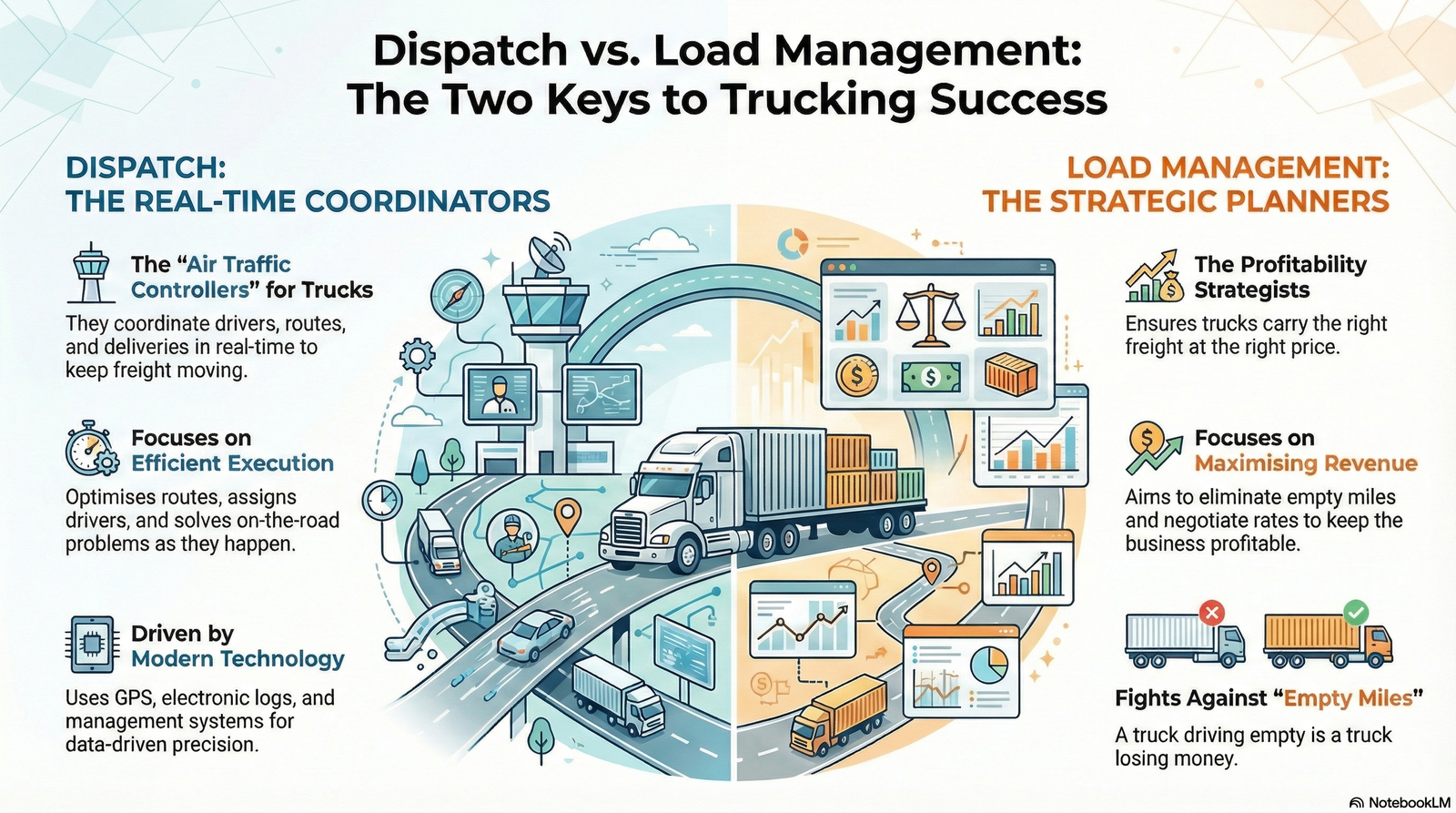
A freight dispatcher is the command center for trucking operations. They coordinate drivers, manage shipments, plan routes, and solve problems in real-time. Think of them as air traffic controllers for trucks—keeping everything moving safely and efficiently while juggling multiple drivers, loads, and deadlines simultaneously.
Key Responsibilities of Freight Dispatchers
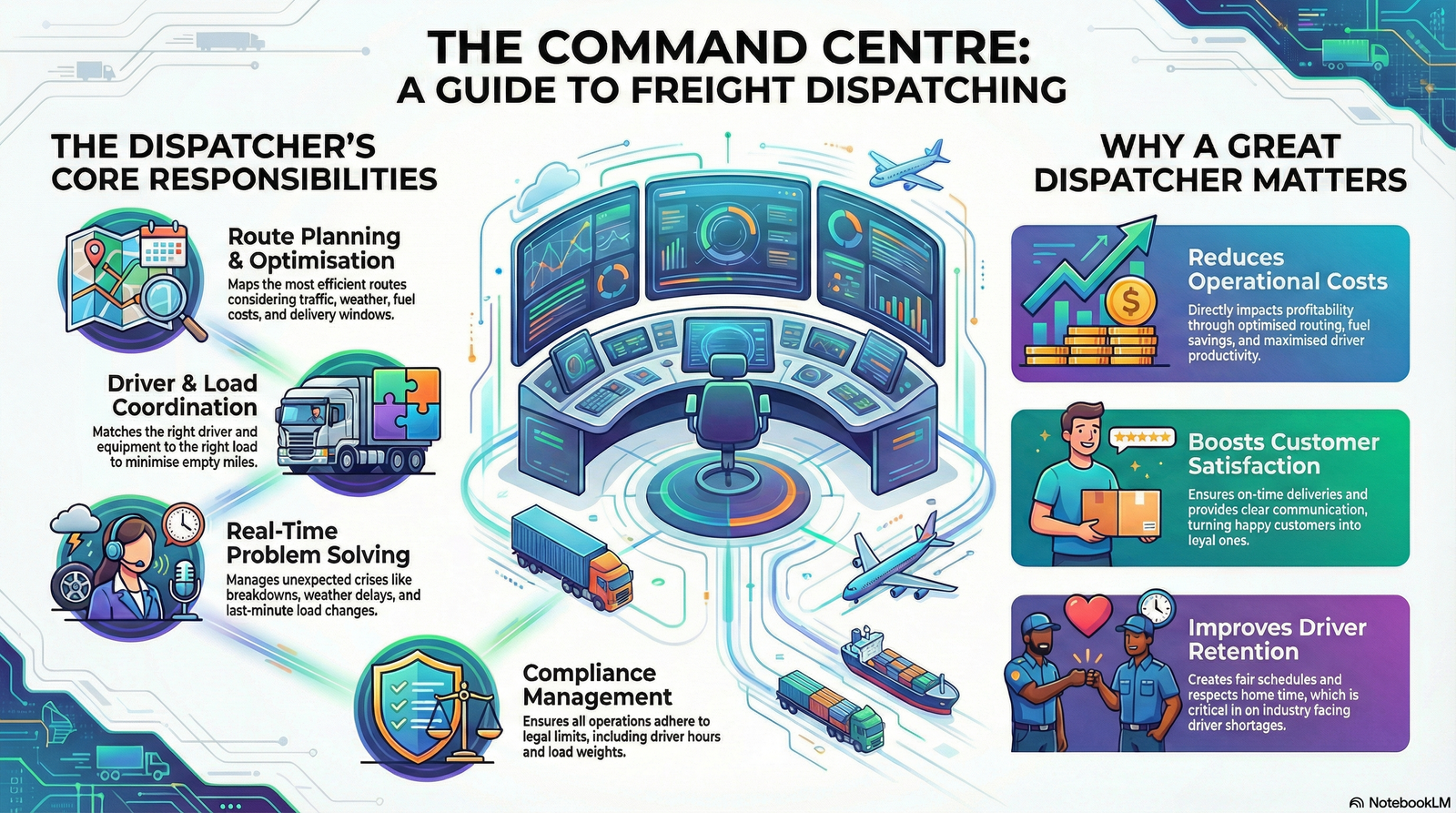
Route Planning and Optimization - Dispatchers map out the most efficient routes considering traffic, weather, fuel costs, and delivery windows. A smart route saves hundreds in fuel and keeps drivers on schedule without breaking hours-of-service regulations.
Driver Coordination - Matching the right driver to the right load isn't simple. Dispatchers consider location, available driving hours, special certifications, home time needs, and equipment availability. Good assignments mean fewer empty miles and happier drivers.
Real-Time Communication - Once trucks roll, dispatchers monitor progress, update customers, handle schedule changes, and stay in constant contact with drivers. This keeps everyone informed and problems get solved before they escalate.
Problem Solving - Breakdowns happen. Weather delays occur. Loads change last-minute. Dispatchers handle these crises calmly, finding solutions that keep freight moving and customers satisfied.
Compliance Management - Dispatchers ensure operations stay legal by monitoring hours-of-service limits, verifying permits and documentation, tracking load weights, and maintaining proper records. This protects the company from fines and shutdowns.
Skills That Make Great Freight Dispatchers
Communication - You're talking to drivers, customers, brokers, and managers all day. Clear communication and active listening prevent misunderstandings and build trust.
Organization - Managing multiple drivers and loads requires serious multitasking skills. Great dispatchers track details, prioritize effectively, and stay flexible when plans change.
Geographic Knowledge - Knowing highways, traffic patterns, truck restrictions, and delivery areas helps dispatchers make smarter routing decisions that save time and money.
Tech Savvy - Modern dispatching means working with transportation management systems (TMS), GPS tracking, electronic logging devices (ELDs), load boards, and communication apps. Comfort with technology is essential.
Quick Thinking - Problems need fast solutions. Good dispatchers make decisions with incomplete information, anticipate issues before they happen, and find creative fixes.
Why Freight Dispatchers Matter to Business Success
Dispatchers directly impact your bottom line in multiple ways. They reduce costs through optimized routing, efficient load planning, and maximized driver productivity. Smart dispatching can mean the difference between profit and loss on individual loads.
They boost customer satisfaction by ensuring on-time deliveries, providing accurate tracking updates, and resolving issues professionally. Happy customers become loyal customers. They improve driver retention in an industry facing massive driver shortages. Dispatchers who respect home time, communicate clearly, and create fair schedules keep drivers from jumping to competitors. They ensure regulatory compliance, protecting your company from expensive fines and legal troubles that could shut down operations.
Types of Freight Dispatchers
Company Dispatchers work directly for trucking companies managing their own fleets. They develop deep expertise in specific routes and customers.
Independent Dispatchers contract with owner-operators or small trucking companies, typically managing multiple clients for a percentage of load revenue or flat fee.
Specialized Dispatchers focus on specific freight like refrigerated goods, hazardous materials, or oversized loads, requiring additional knowledge of specialized regulations.
Why Freight Dispatchers Are Essential?
Freight dispatchers are the backbone of trucking operations. They coordinate complex logistics, solve real-time problems, maintain critical relationships, and keep freight moving efficiently across the country.
For businesses, skilled dispatchers mean better efficiency and profitability. For individuals, dispatching offers a challenging career with solid growth opportunities in a stable, essential industry. The next time you see a truck on the highway, remember there's a dispatcher coordinating that journey, solving problems, and making sure that load arrives exactly when and where it should. That's the power of freight dispatching.

Leave a comment
Your email address will not be published. Required fields are marked *