In the trucking world, two functions make or break your operation: dispatch and load management. Get them right, and your trucks stay loaded, drivers stay happy, and profits roll in. Get them wrong, and you're burning fuel on empty miles while watching loads slip to competitors.
So what exactly are these critical processes, and why should you care?
Dispatch
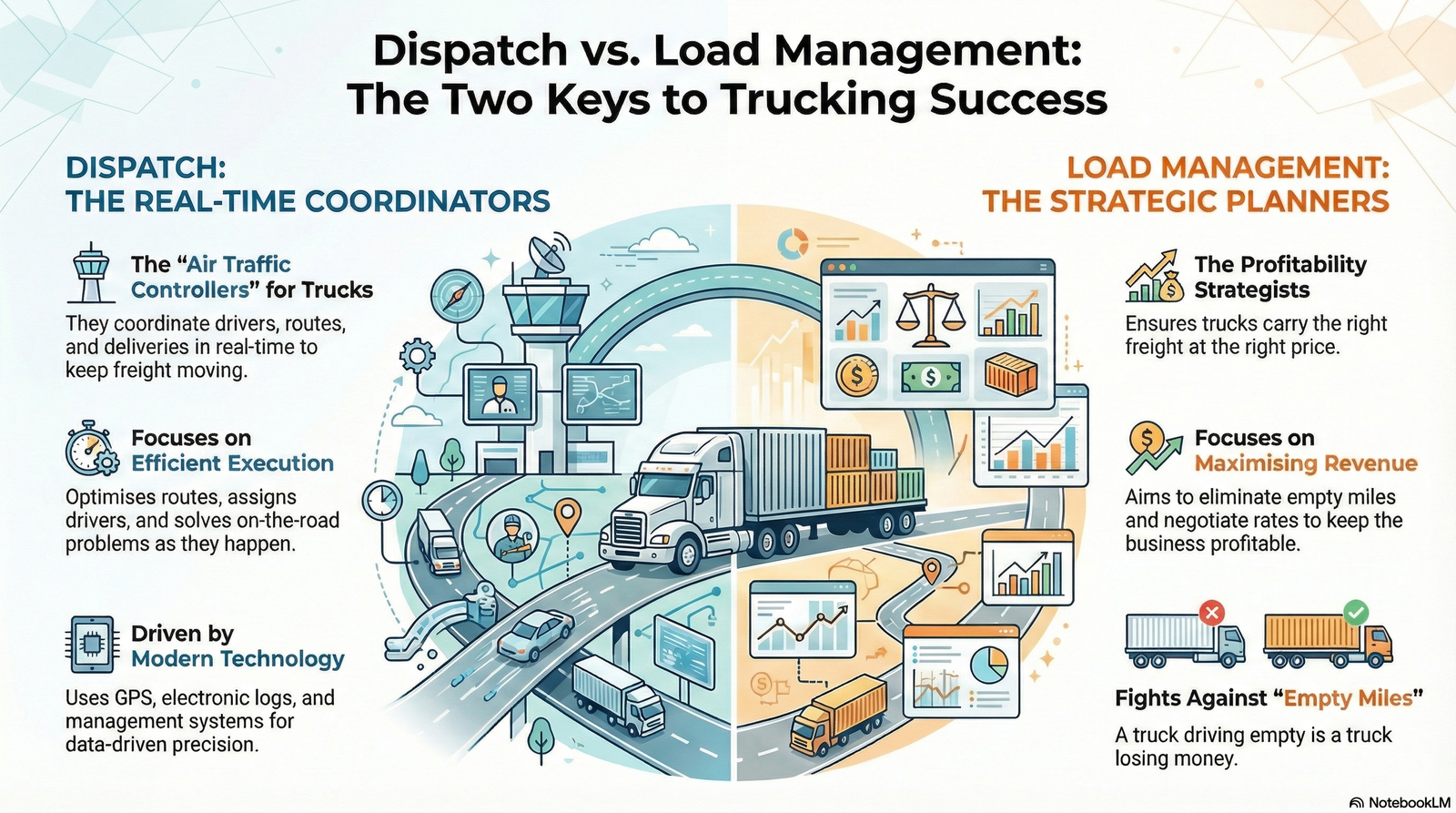
Think of dispatchers as air traffic controllers for trucks. They're coordinating drivers, routes, and deliveries in real-time to keep freight moving smoothly.
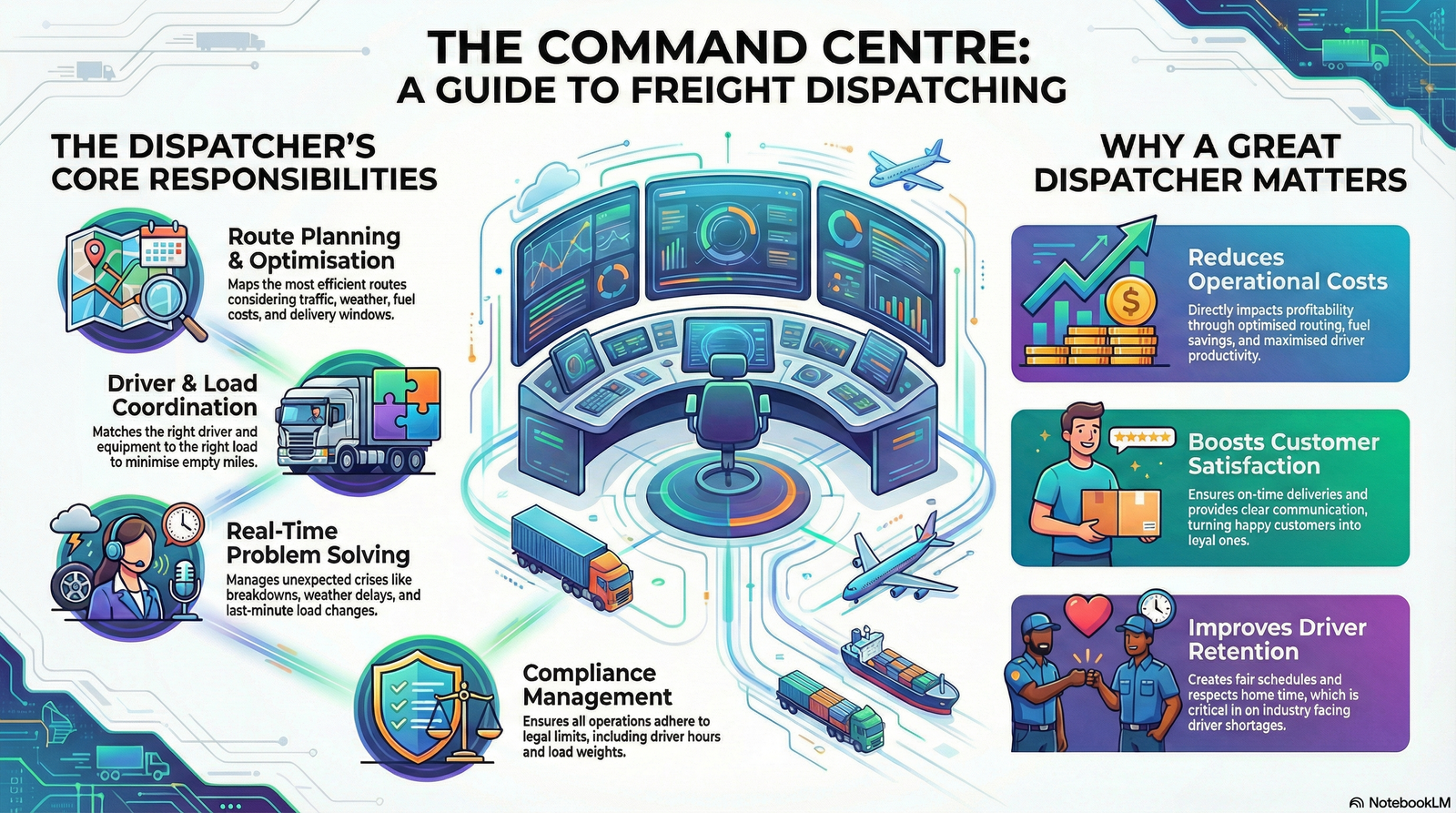
A good dispatcher is juggling route optimization to save fuel and time, matching the right driver to the right load based on location and availability, solving problems when breakdowns or delays hit, and keeping everyone in the loop from drivers to customers. Modern dispatchers aren't working with paper maps anymore. They've got GPS tracking, electronic logging devices for hours-of-service compliance, transportation management systems tying everything together, and mobile apps keeping drivers connected. The job has evolved from clipboard chaos to data-driven precision.
Load Management
While dispatch moves your trucks, load management makes sure they're carrying the right freight at the right price. This is where strategy meets execution.
Load managers focus on maximizing every inch of trailer space because empty space is lost money, eliminating deadhead miles by planning smart return loads, combining partial shipments when it makes sense, and negotiating rates that keep the business profitable. Here's the thing: a truck driving empty is a truck losing money. Load management is all about keeping capacity utilized and revenue flowing. That means planning multi-stop deliveries efficiently, matching available freight with available trucks, working with brokers to fill gaps, and handling all the documentation from bills of lading to customs paperwork.
Why They Work Better Together
Dispatch and load management aren't separate silos. The magic happens when they work in sync. Load managers find profitable freight, dispatchers assign the best-positioned driver, routes get optimized around the load requirements, and both teams adjust on the fly when reality hits. This teamwork is what separates struggling operations from profitable ones. When these functions communicate well, you minimize empty miles, maximize driver productivity, keep customers satisfied with on-time deliveries, and actually make money instead of just staying busy.
Dispatch and load management aren't back-office functions. They're the engine room of your freight operation. Great dispatchers keep trucks moving efficiently. Smart load managers keep those trucks full of profitable freight. Together, they determine whether you're thriving or just surviving.
Whether you're running five trucks or five hundred, the principle is the same: invest in skilled people, give them the right tools, and let them work together seamlessly. That's how you build a freight operation that consistently delivers results while competitors wonder how you do it.
The companies winning in freight today aren't the ones with the most trucks. They're the ones who've mastered dispatch and load management. Everything else is just details.

Leave a comment
Your email address will not be published. Required fields are marked *