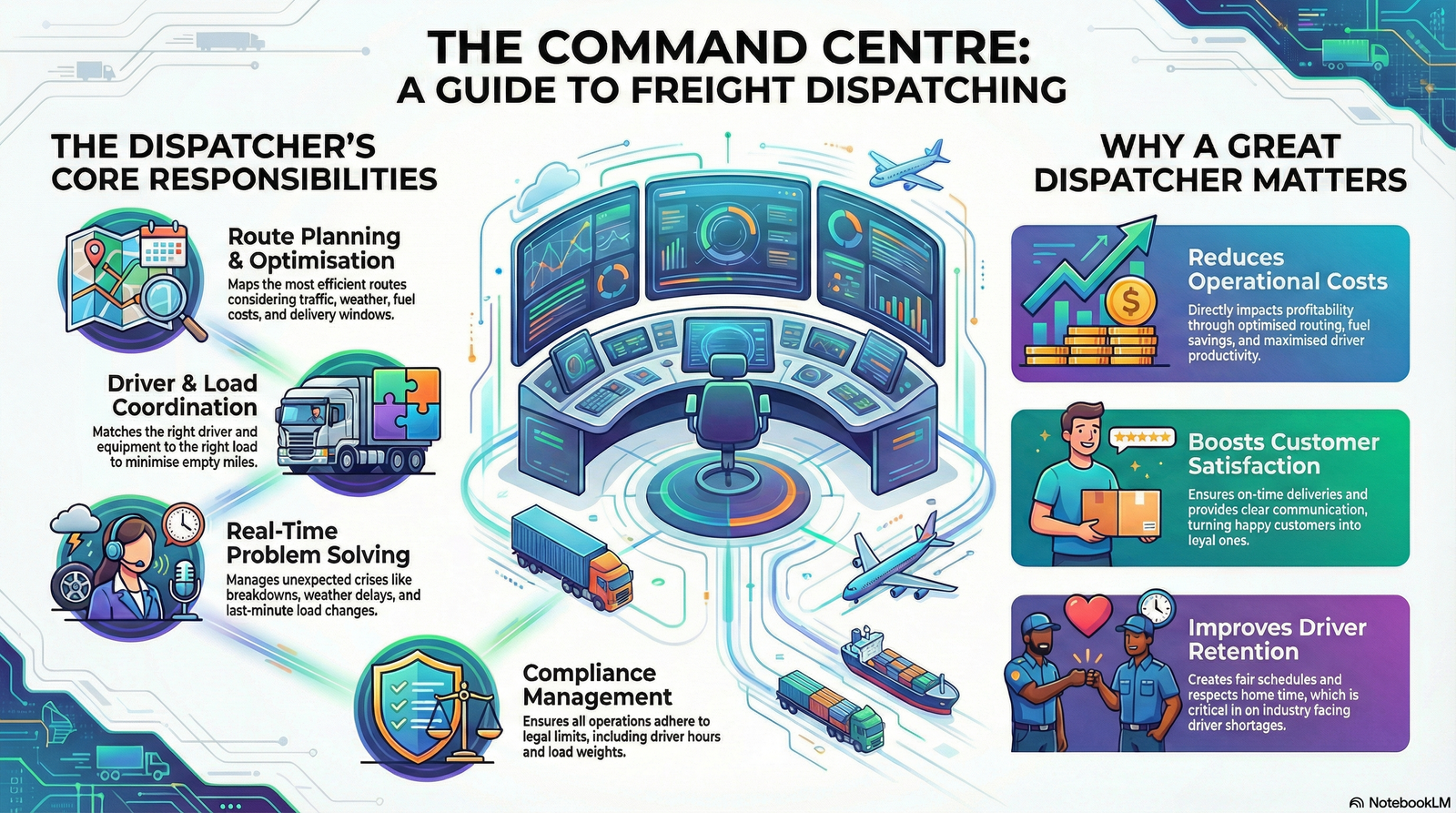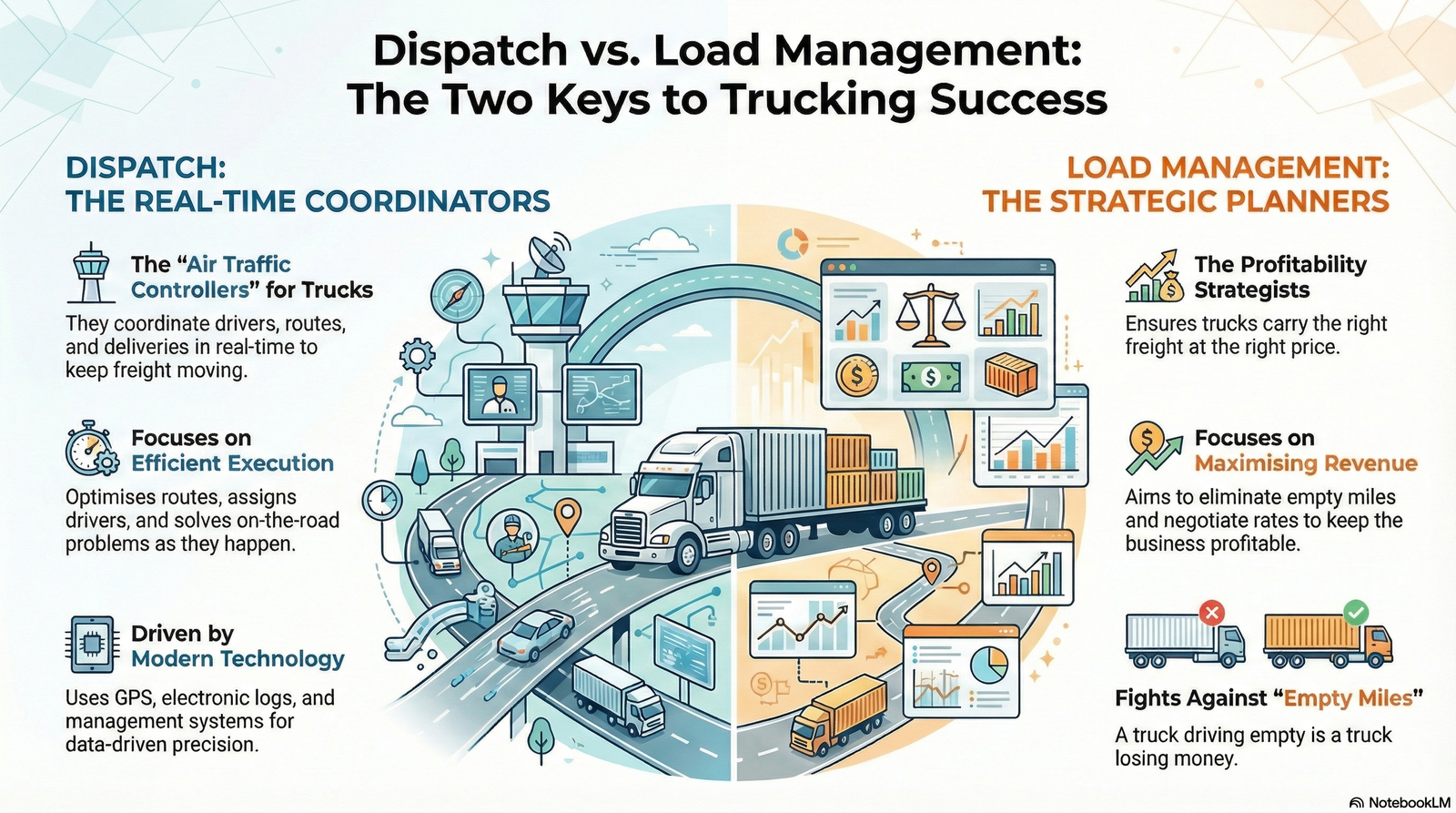
Managing one load is straightforward. Managing ten simultaneously? That's where things get chaotic, unless you know what you're doing. Whether you're a dispatcher juggling multiple drivers, a fleet manager overseeing operations, or a freight broker coordinating shipments, keeping control of multiple loads is the difference between smooth operations and constant firefighting.
Here's how the pros manage multiple loads without dropping the ball.
The Reality of Multi-Load Management
Let's be honest, managing multiple loads means dealing with moving targets. While you're tracking one delivery, another driver calls with a breakdown. As you're solving that problem, a customer needs an update on a third shipment. Meanwhile, you've got loads to plan for tomorrow and routes to optimize for next week.
It's organized chaos, and without the right systems and strategies, it becomes just plain chaos.
Set Up Your Command Center Right
Before you can manage multiple loads effectively, you need the right foundation.
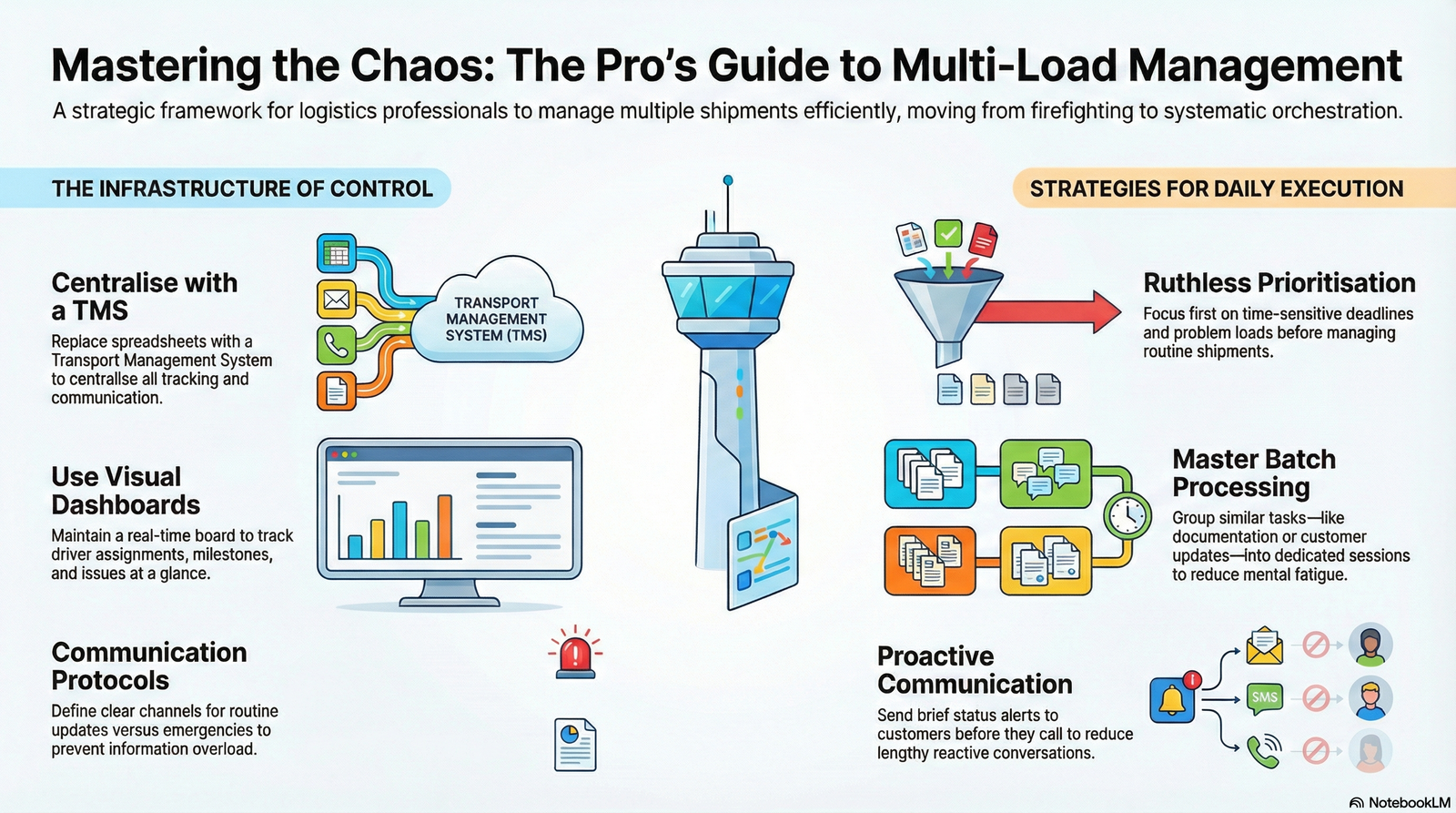
Invest in Proper Technology - Stop trying to manage everything with spreadsheets and sticky notes. A good Transportation Management System (TMS) centralizes all your load information, tracking, and communication in one place. GPS tracking gives you real-time visibility on every truck. Load boards help fill capacity gaps quickly. These tools aren't luxuries—they're necessities for multi-load management.
Create a Visual Dashboard - Whether it's your TMS dashboard or a physical board, you need to see all active loads at a glance. Track pickup and delivery times, driver assignments, current locations, critical milestones, and potential issues flagged for attention. Visual management prevents loads from slipping through the cracks.
Establish Communication Protocols - Decide how and when you'll communicate with drivers, customers, and partners. Set regular check-in times for long hauls. Define what constitutes an emergency versus routine update. Clear protocols prevent communication overload while ensuring important information gets through.
Prioritization Is Everything
You can't give equal attention to every load simultaneously. Learn to prioritize ruthlessly.
Time-Sensitive Loads Come First - Loads approaching delivery deadlines or pickup appointments get priority attention. Check these first thing each morning and throughout the day.
High-Value Customers Need Extra Care - Your biggest accounts or most important relationships deserve proactive communication and closer monitoring.
Problem Loads Demand Immediate Focus - When issues arise—delays, breakdowns, documentation problems—address them immediately before small problems become disasters.
Routine Loads Can Run on Autopilot - Loads running smoothly with experienced drivers on familiar routes need minimal intervention. Check status periodically but don't micromanage.
The key is knowing which category each load falls into and adjusting your attention accordingly.
Master the Batch of Processing
Constantly switching between tasks kills productivity. Instead, batch similar activities together.
Schedule Dedicated Planning Time - Block out specific times for route planning and load assignments rather than doing it sporadically throughout the day. You'll make better decisions and work more efficiently.
Group Customer Communications - Rather than calling customers individually as questions arise, batch non-urgent communications into scheduled update calls. You'll save time and sound more organized.
Handle Documentation in Batches - Process bills of lading, proof of delivery, and other paperwork in dedicated sessions rather than one document at a time.
Update Systems Systematically - Update your TMS, tracking systems, and records in regular intervals rather than constantly jumping in and out.
Batch processing reduces mental fatigue and helps you maintain focus on critical real-time issues.
Build Preventive Systems
The best way to manage multiple loads is to prevent problems before they happen.
Standardize Load Planning - Create templates and checklists for different load types. Standard procedures reduce errors and speed up planning for new loads.
Automate Routine Communications - Use automated tracking updates for customers when loads are running normally. This frees you to focus on problems and exceptions.
Develop Contingency Plans - Have predetermined responses for common issues like weather delays, breakdowns, or driver illness. When problems hit, execute the plan rather than scrambling.
Build Buffer Time Into Schedules - Don't plan loads with zero margin for error. Build realistic buffers that account for typical delays. This prevents one small issue from cascading across multiple loads.
Prevention takes effort upfront but saves massive time and stress when managing multiple loads simultaneously.
Communication Strategies for Multiple Loads
Clear communication keeps everyone aligned without overwhelming you.
Set Expectations With Drivers - Establish when drivers should check in, what constitutes an emergency call versus a routine update, and how to handle common situations. Trained drivers who know expectations require less hand-holding.
Proactive Customer Updates - Don't wait for customers to call asking for updates. Brief proactive communications prevent lengthy reactive phone calls. A quick text or email saying "Load XYZ on schedule for 2pm delivery" takes 30 seconds and prevents a 10-minute phone conversation.
Use Technology for Routine Updates - Automated tracking links, mobile apps, and GPS sharing reduce the need for constant status calls. Save personal communication for issues and relationship-building.
Triage Your Inbox - Respond to urgent messages immediately. Flag important items for follow-up. Archive routine confirmations. Don't let your inbox become another source of chaos.
Time Management Tactics
With multiple loads demanding attention, time management becomes critical.
Start Each Day With a Review - Spend 15-30 minutes reviewing all active loads, noting critical milestones for the day, and identifying potential issues. This roadmap guides your entire day.
Time-Block Your Schedule - Dedicate specific time blocks to planning, monitoring, communication, and problem-solving. Protect these blocks from interruptions when possible.
Handle Quick Wins Immediately - If something takes less than 2 minutes, do it now. Quick responses prevent small tasks from piling up.
Schedule Difficult Tasks for Peak Performance Times - Tackle complex planning or problem-solving during your most alert hours. Save routine tasks for lower-energy periods.
Build in Recovery Time - Managing multiple loads is mentally demanding. Short breaks prevent burnout and maintain decision quality.
Common Mistakes to Avoid
Micromanaging Every Load - You'll burn out trying to control every detail. Focus on exceptions and high-priority loads.
Ignoring Early Warning Signs - Small delays or minor issues often signal bigger problems coming. Address them early before they cascade.
Failing to Document - When managing multiple loads, memory fails. Document important details, decisions, and customer commitments.
Overcommitting Capacity - Don't accept more loads than you can reliably handle. Overpromising damages your reputation when you inevitably underdeliver.
Neglecting Driver Relationships - Drivers are your partners in managing loads successfully. Poor relationships make everything harder.
Building Your Multi-Load Management System
Start with these steps to develop effective multi-load management capabilities:
Audit Your Current Process - Identify where breakdowns currently occur. What causes stress? Where do errors happen? What takes excessive time?
Implement One Improvement at a Time - Don't overhaul everything simultaneously. Pick your biggest pain point and fix it, then move to the next.
Create Standard Operating Procedures - Document your best practices for common scenarios. This creates consistency and helps train others.
Invest in Training - Both for yourself and your team. Better skills make managing complexity easier.
Review and Refine Regularly - Schedule monthly reviews of what's working and what isn't. Continuous improvement compounds over time.
Managing multiple loads without losing control comes down to systems, prioritization, and smart use of technology. You need clear processes that prevent problems, tools that provide visibility and automate routine tasks, communication protocols that keep everyone aligned without overwhelming you, and the ability to prioritize ruthlessly based on urgency and importance. The dispatchers who excel at managing multiple loads aren't superhuman, they're systematic. They've built processes that work, invested in appropriate technology, developed strong communication habits, and continuously refined their approach based on experience.
Start with the fundamentals: get the right technology, establish clear priorities, build preventive systems, and improve your processes iteratively. You won't master multi-load management overnight, but with consistent effort, you'll develop the capability to handle increasing complexity while maintaining control and delivering results.
That's when you transition from constantly fighting fires to confidently orchestrating multiple moving pieces and that's when your operation becomes truly scalable and profitable.

Leave a comment
Your email address will not be published. Required fields are marked *